
When discussing centrifugal pumps, the pump curve is often the starting point for selection and operation. It defines the relationship between flow and head, helping identify the expected operating point. However, a pump curve alone does not define a design envelope. The reason is simple. Pumps do not operate in isolation. They operate as part of a complete hydraulic system.
Learn more about complete hydraulic system
design through in2Dredging’s (i2D) Pumps 'n Pipeline Masterclass.
A Pump Curve Does Not Tell the Whole Story
In practice, many common dredging pump problems occur even when the operating point remains on the specified pump curve.
Cavitation may develop because the available Net Positive Suction Head (NPSH) is insufficient, even though flow and head are achieved. Unlike the pump curve, NPSH defines the centrifugal pump’s suction performance and represents an additional operating constraint. Excessive wear can result from pumping abrasive solids at high velocities or elevated mixture densities. While vibration, instability and internal recirculation may develop when operating too far from the pump’s Best Efficiency Point (BEP).
In each of these
situations, the centrifugal pump continues to deliver flow but is no longer
operating within conditions that provide acceptable reliability, efficiency or
service life. The extent of these effects depends on the abrasiveness of the pumped
mixture.
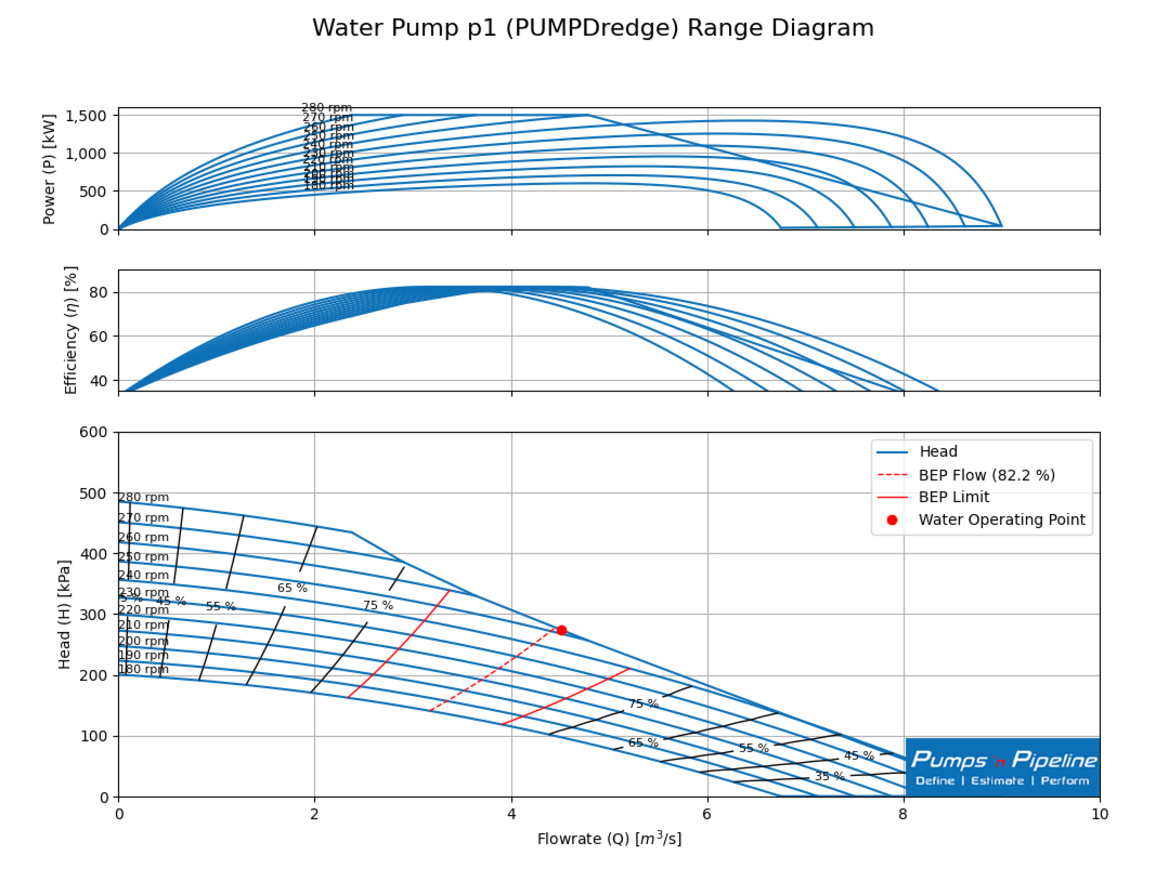
Figure 1: Pump characteristics and BEP limits
The Difference Between a Pump Curve and a Design Envelope
This highlights an important distinction.
A pump curve describes the hydraulic capability of a pump.
A design envelope defines the range of operating conditions where the complete pump-system combination can operate reliably, efficiently and economically.
The design envelop considers far more than head and flow. It includes factors such as:
- NPSH availability
- Mixture velocity
- Abrasiveness
- Pipeline losses
- Pump efficiency
- Mechanical operating limits
The Hydraulic System Determines the Operating Point
The operating point is not determined by one pump alone. It results from the interaction between the pump curves and the pipeline curve.
Figure 2 compares two otherwise identical dredging systems where only the suction pipeline diameter changes from 0.9 m to 0.8 m. Although the pump and engine remain unchanged, the smaller suction pipeline significantly reduces the feasible operating region.
Only operating points with relatively low mixture densities and supercritical mixture velocities remain viable. This demonstrating how a seemingly minor change in the hydraulic system can fundamentally alter the overall system performance.
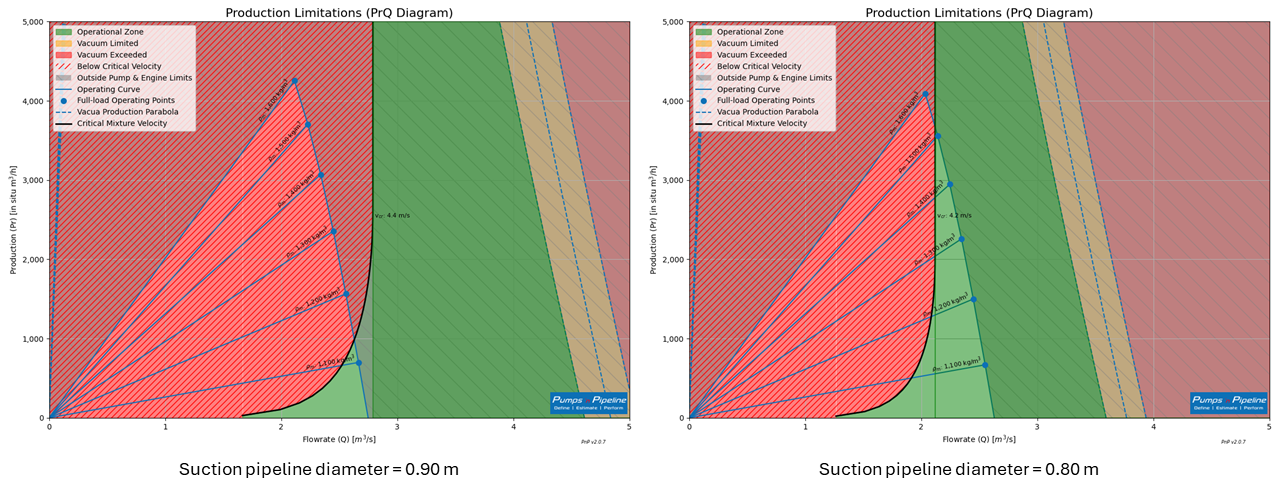
Figure 2: Operational zone diagrams
Think Beyond the Pump
For this reason, the design envelope should not be viewed as a property of the pump itself. It is a property of the interaction between the pump, the pipeline and the transported mixture, and should be considered as a hydraulic system with a multitude of design conditions to fulfil.
i2D’s Pumps 'n Pipeline (PnP) tool has been developed by dredging engineers to evaluate complete hydraulic system designs. It enables engineers to easily verify that all relevant design criteria are met. This allows engineers to confidently identify practical operating envelopes rather than relying solely on pump curves.
Learn How to Design Complete Pumping Systems
Discover the complete hydraulic system design methodology during i2D’s upcoming Pumps 'n Pipeline Masterclass. This event shows how to analyse completed dredging systems and define practical operating envelopes for reliable, efficient and economical performance.
The Pumps ‘n Pipeline Masterclass details are follows:
Date: Wednesday 12 August – Thursday 13 August 2026
Time: 6:00 – 9:00 AWST, 8:00 – 11 am AEST and 15:00 – 18:00 PST
Format: Online or in person at i2D office
Registration: Via the Pumps ‘n Pipeline Masterclass registration page
For full course details, download the Pumps ‘n Pipeline Masterclass Brochure.